
Hail damage can be easy to miss from the ground, but small impact marks can turn into roof leaks, granule loss, and costly repairs if they are ignored. After a hail event, the safest next step is to have a local roofing contractor inspect the roof before hidden damage gets worse.
This guide explains what hail damage looks like, how contractors inspect shingles, gutters, vents, and flashing, when roof repair may be enough, and when replacement or insurance documentation may be needed. Homeowners can also browse recent local roofing reports for Oklahoma, Kansas, and Texas.
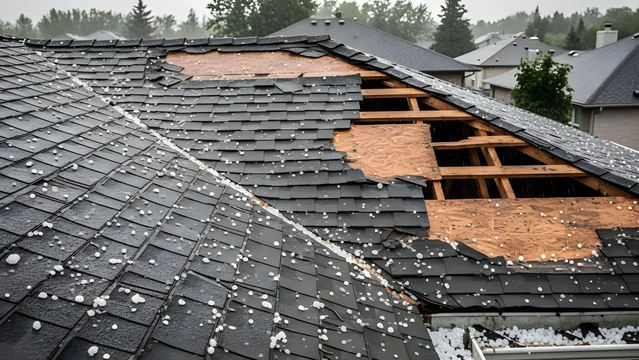
How Hail Damages Roofing Systems
Hail damage is not always obvious right after a storm. The roof may look normal from the street, while shingles, vents, gutters, flashing, or underlayment already have impact damage that can lead to leaks later. Wind-driven hail can also hit the roof at an angle, making damage harder to spot without a close inspection.
A roofing contractor will usually check for shingle bruising, granule loss, exposed asphalt, dented metal components, cracked seals, and soft impact areas. Hail damage reports are often reviewed by homeowners after storms in states such as Nebraska, Colorado, and Illinois.
Granule Loss and Shingle Bruising
Granule loss is one of the most common warning signs after a hailstorm. When hail knocks protective granules off asphalt shingles, the roof can age faster and become more exposed to sun, rain, and future storm damage. Shingle bruising can also weaken the roofing surface even when the damage is not easy to see from the ground.
- Granules in gutters or downspouts after a hail event
- Dark spots or bare patches on asphalt shingles
- Soft impact marks that may indicate bruised shingles
- Random hit patterns across different roof slopes
Metal Component Damage
Metal parts around the roof often show hail impact before the shingles look damaged. Gutters, vents, flashing, skylights, and exhaust covers can reveal dents, cracks, or impact marks that help a contractor understand how severe the storm may have been.
- Dented gutters or downspouts after a hailstorm
- Pockmarked vents or metal exhaust covers
- Loose flashing near ridges, valleys, or roof edges
- Cracked skylight seals or damaged roof penetrations
If metal components show visible hail impact, the roof surface should usually be inspected more closely. Homeowners often review hail-related roofing reports in areas such as Missouri and Tennessee after severe weather activity.
Hail Damage Roof Repair vs. Replacement
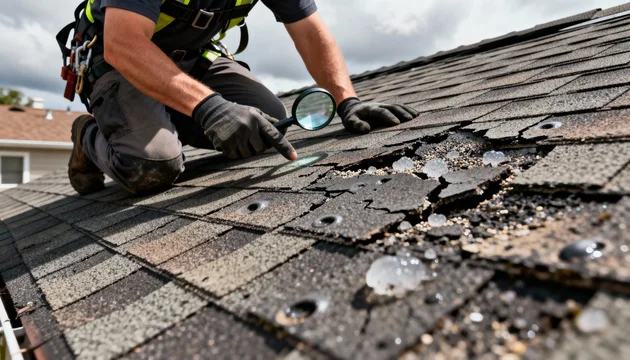
Not every hail-damaged roof needs full replacement. In some cases, a contractor may recommend localized repairs if the damage is limited and the roof is still in good condition. In other cases, widespread impact marks, older shingles, or signs of water intrusion may make replacement the safer long-term option.
- Damage spread – impact marks across multiple roof slopes may require more than a small repair
- Roof age – older shingles are usually more vulnerable after hail impact
- Shingle condition – cracked, bruised, or exposed areas can weaken the roofing system
- Water intrusion – leaks, soft decking, or attic moisture may point to deeper damage
A local roofing contractor can inspect the roof and explain whether repair, replacement, or additional documentation makes sense. Homeowners often compare hail-related roofing reports in areas such as Indiana and Georgia after severe weather.
Hail Damage Documentation and Insurance Questions
Servoya is not an insurance company and does not determine whether hail damage is covered by a homeowner policy. Coverage, claim deadlines, deductibles, and approval decisions are handled by the insurance carrier. A roofing contractor can inspect the roof, document visible damage, and help the homeowner understand what roof repair or replacement options may be needed.
- Contact your insurance carrier to confirm policy terms, deadlines, and claim requirements
- Request a roof inspection if hail impact, granule loss, leaks, or dented metal components are visible
- Keep photos and notes of storm activity, roof condition, gutters, vents, and interior water stains
- Ask the contractor for written findings so you can review the roof condition clearly before deciding next steps
Homeowners often compare local hail-related roofing reports in areas such as Ohio, Kentucky, and Arkansas after severe weather activity.
What to Expect During a Hail Damage Roof Inspection
During a hail damage roof inspection, a local roofing contractor may check shingles, gutters, vents, flashing, skylights, roof edges, attic areas, and signs of water intrusion. The goal is to understand the roof condition, identify visible damage, and explain whether repair, replacement, or continued monitoring may make sense.
If the roof has visible impact marks, missing granules, leaks, or damaged metal components, getting an inspection quickly can help prevent small problems from becoming larger repairs. Homeowners often review hail-related roofing activity in areas such as Louisiana and Alabama after severe weather.
Frequently Asked Questions
Common warning signs include granules in gutters, dented vents, dark spots on shingles, soft impact marks, loose flashing, or new leaks after a hailstorm. Some hail damage is not visible from the ground, so a local roofing contractor inspection is usually the safest next step.
Servoya does not determine insurance coverage or claim approval. Coverage depends on the homeowner policy, deductible, carrier rules, timing, and documented roof condition. A contractor inspection can help document visible damage, but all insurance decisions are handled by the insurance carrier.
Deadlines vary by insurance carrier, policy, and location. Homeowners should contact their insurance carrier directly to confirm reporting requirements. From a roofing standpoint, it is usually better to inspect possible hail damage sooner rather than waiting for leaks or additional deterioration.
Roof damage depends on hail size, wind speed, roof age, shingle type, impact angle, and existing roof condition. Even smaller hail can cause concerns when combined with strong wind or older shingles, while larger hail may create more obvious impact marks.
Class 4 shingles are designed to provide higher impact resistance than standard shingles. They may be useful in hail-prone areas, but product choice, cost, warranty, and any possible insurance discount should be confirmed directly with the contractor, manufacturer, and insurance carrier.
Yes, some hail damage can be repaired if it is limited to a small area and the roof is otherwise in good condition. If damage is widespread, the roof is older, or water intrusion is present, a contractor may recommend a larger repair or replacement evaluation.
Track current storm activity across the US: View Live Storm Map →